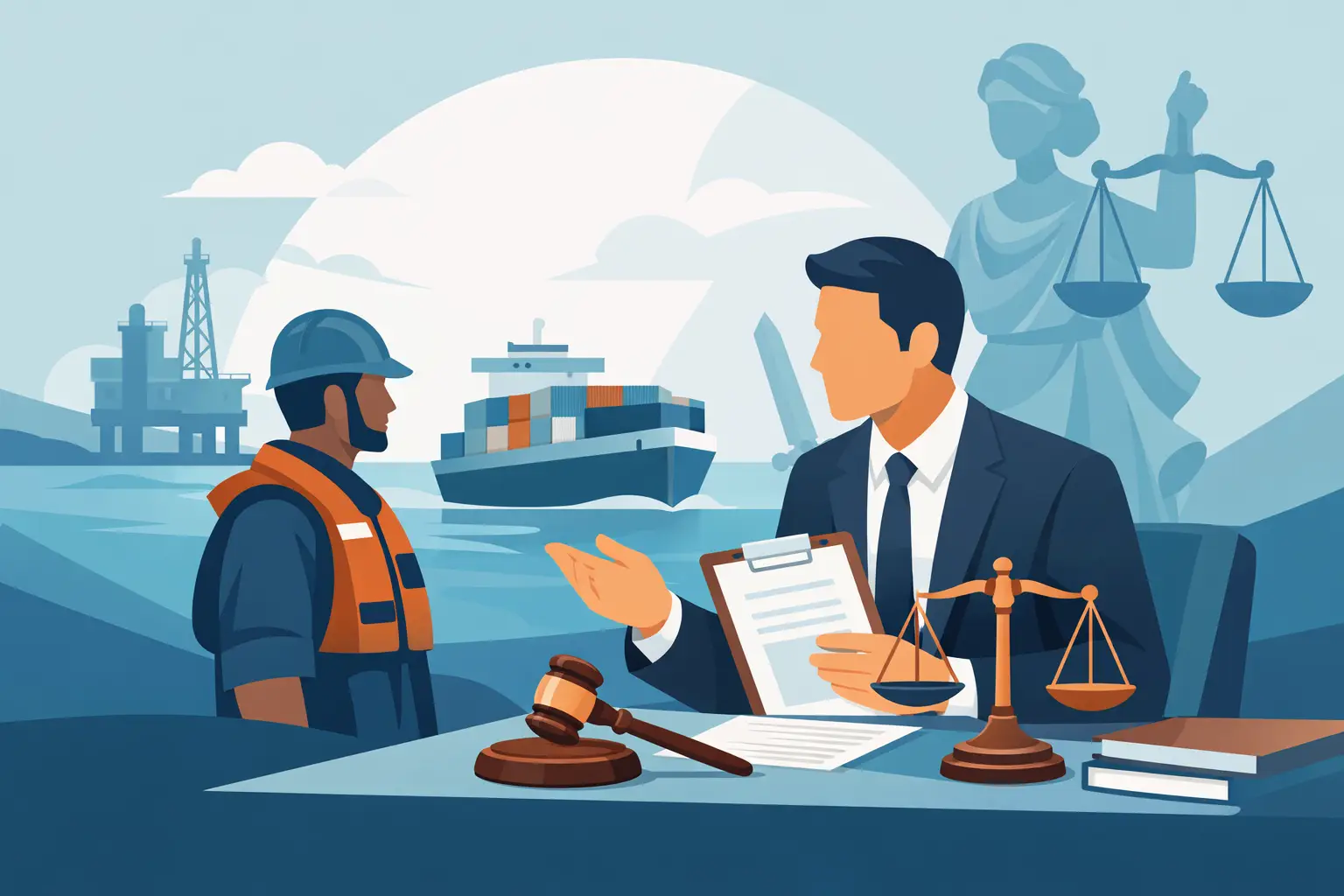


When to Call a Jones Act Claim Attorney
An offshore injury can change everything in a single shift. One bad lift, a slick deck, a failed piece of equipment, or a captain pushing the crew too hard can leave a seaman dealing with pain, lost income, and a lot of unanswered questions. That is usually the moment a Jones Act claim attorney becomes more than a search term – it becomes part of protecting your future.
For workers in the Gulf, this is not a small issue. Offshore jobs are demanding, dangerous, and often tied to employers and insurers that move fast once someone gets hurt. The company may sound helpful at first. But while you are focused on treatment and getting home, they may already be building a record that protects them, not you.
What a Jones Act claim attorney actually does
The Jones Act gives certain maritime workers the right to bring a claim against their employer when negligence played a role in an injury. That sounds straightforward, but these cases are rarely simple. A serious claim can involve vessel status, seaman status, unsafe work practices, understaffing, training failures, equipment issues, maintenance records, witness statements, and overlapping maritime laws.
A Jones Act claim attorney looks at the full picture early. That includes how the accident happened, whether the vessel was reasonably safe, whether the crew was properly trained, and whether the employer ignored risks that should have been addressed. In many cases, the real story is bigger than the incident report.
Just as important, your attorney protects you from common mistakes. Offshore workers are often asked to give recorded statements, sign paperwork, or return to work before they are physically ready. Those decisions can affect the value of a claim and, in some cases, whether certain rights are harder to enforce later.
The Jones Act is not ordinary workers’ compensation
One reason injured seamen get confused is that maritime law does not work like a standard onshore workers’ comp claim. Under the Jones Act, an injured seaman may seek damages tied to employer negligence. Depending on the facts, that can include medical expenses, lost wages, lost earning capacity, and pain and suffering.
That is a major difference. In a typical workers’ compensation claim, benefits are usually limited by statute. A Jones Act case can allow a broader recovery, but it also requires proof and preparation. You do not just report the injury and wait for a check.
There may also be a claim for unseaworthiness against the vessel owner, along with the right to maintenance and cure. Those are separate rights with separate rules. Maintenance and cure can require payment for basic living expenses and medical care until maximum medical improvement is reached, even if there is a dispute about broader fault. But companies do not always handle that obligation fairly, especially when the injury is expensive or the timeline is long.
When you should contact a Jones Act claim attorney
The short answer is sooner than most people think.
If you were hurt while working aboard a vessel and you believe unsafe conditions, poor supervision, defective equipment, or pressure from the employer played any part, it is worth speaking with counsel early. You do not need to wait until the company denies responsibility. In fact, waiting can make it harder to preserve evidence.
Early legal help matters when there are witnesses who need to be identified, vessel conditions that may change, electronic records that should be preserved, or confusion about who your employer actually is. In offshore cases, multiple companies may be involved – the vessel owner, an operator, a contractor, or a staffing company. Sorting that out is not something most injured workers should have to do alone while recovering.
You should also call if maintenance and cure payments are delayed, reduced, or suddenly cut off. That often signals a larger fight ahead. The same is true if you are being sent to a doctor chosen by the company and feel your symptoms are being minimized.
Signs your offshore injury claim may be stronger than the company admits
Not every accident becomes a Jones Act case, but many valid claims are downplayed early. Employers may frame a serious event as simple carelessness by the worker. That does not end the analysis.
A claim may be stronger than you realize if the deck was slippery, equipment was not maintained, the job required too few crew members, safety procedures were ignored, or you were ordered to keep working in dangerous conditions. Fatigue also matters. Offshore crews often work long hours in physically demanding environments. If exhaustion contributed to a mistake or if the company created unsafe scheduling demands, that can be relevant.
Training is another major issue. If you were assigned a task without proper instruction, without enough help, or without safe equipment, the employer may share responsibility. Maritime employers have a duty to provide a reasonably safe place to work. When they fail to do that, the consequences can be life-changing.
What to expect after hiring an attorney
A good maritime case is built, not guessed at. After you hire counsel, the first steps usually involve gathering reports, medical records, employment records, photographs, vessel information, and witness accounts. Your attorney may also send preservation notices to prevent key evidence from disappearing.
Then comes the harder part – measuring the real impact of the injury. That is not limited to the first hospital bill. Offshore injuries can affect future surgeries, physical limitations, time away from work, and whether you can return to your prior job at all. For a worker who made a living offshore, a back injury, head injury, shoulder injury, or leg injury can change long-term earning power in a serious way.
This is where trial-ready representation matters. Insurance companies and maritime employers often respond differently when they know the lawyer on the other side is prepared to take the case all the way. Some claims resolve through negotiation. Others need litigation. The right approach depends on the evidence, the extent of the injury, and whether the other side is acting reasonably.
Why local experience matters in South Louisiana
In Acadiana and across South Louisiana, offshore work is part of daily life. Families here understand what it means to depend on Gulf jobs, vessel work, and energy-related employment. They also understand how devastating it is when an injury interrupts that income.
That local understanding matters because these are not abstract claims. They involve real pressure – mortgage payments, truck notes, travel for treatment, and the stress of being unable to support your family the way you always have. A lawyer handling a Jones Act case for a Louisiana worker should understand both the legal issues and the practical realities the client is facing.
For that reason, many injured seamen want a firm that can speak plainly, move quickly, and prepare the case as if it may need to be tried. At McConnell Law Offices, that kind of advocacy is central to how serious injury claims are handled.
Common mistakes that can hurt a Jones Act claim
One of the biggest mistakes is assuming the company will do the right thing if you just cooperate and stay patient. Cooperation has limits. You should report the injury, seek medical care, and be truthful, but you should also be careful. Casual statements made while medicated, exhausted, or scared can later be used to shift blame.
Another mistake is delaying treatment or trying to tough it out. Offshore workers are used to pushing through pain, but gaps in treatment can create problems later. If you are hurt, get evaluated and follow medical advice.
Finally, do not assume that if you made a mistake, you have no case. Maritime negligence law is not always all or nothing. Even when an injured worker may share part of the blame, there can still be a recoverable claim depending on the facts.
The real question is not whether you are tough enough
Most offshore workers are used to hard conditions and hard work. They are not looking to file claims lightly. But toughness does not pay medical bills, replace lost wages, or hold an employer accountable for unsafe conditions.
The better question is whether your injury deserves a serious legal review before the company defines the story for you. If you are a seaman dealing with an offshore injury, talking with a Jones Act claim attorney can give you clarity, protect your rights, and put you in a stronger position while you focus on healing.
A case like this is about more than what happened that day on the vessel. It is about whether you and your family have a fair path forward after it did.