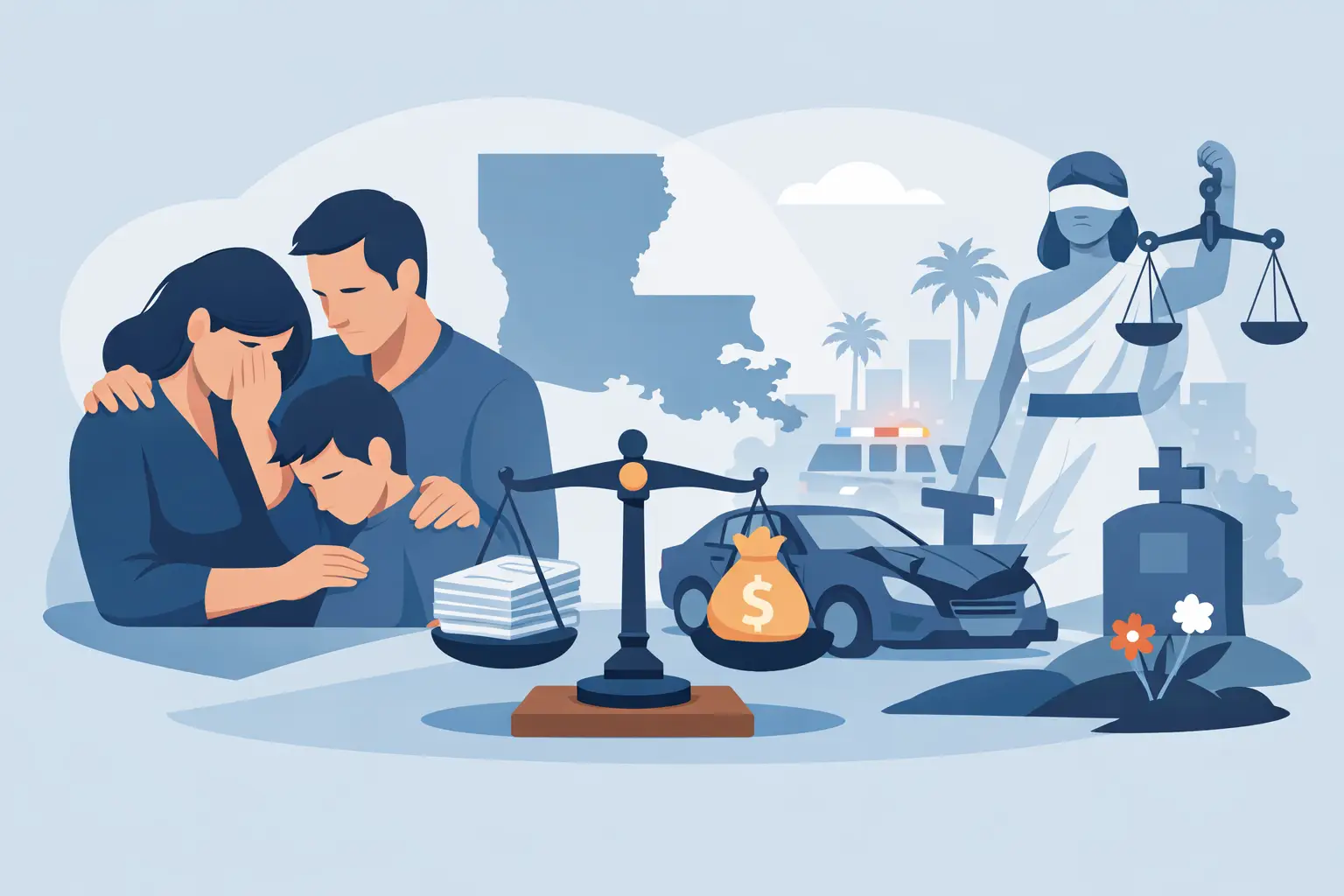


Can Family Sue After a Fatal Accident in Louisiana?
A fatal accident changes a family’s life in a single phone call. Along with grief, there may be hospital bills, funeral costs, lost household income, and hard questions about what happened. When people ask, “can family sue after fatal accident,” the answer in Louisiana is often yes – but only certain relatives may bring a claim, and the timing and facts matter.
A lawsuit cannot replace the person your family lost. It can, however, hold the responsible party accountable and seek financial support for the harm that loss has caused. Whether the accident involved a careless driver, a trucking company, an unsafe workplace, a defective product, or an offshore incident, a careful legal review can help your family understand its rights.
Can Family Sue After a Fatal Accident?
Louisiana law allows qualifying family members to pursue a wrongful death claim when someone’s negligence or wrongful conduct causes a death. Negligence can take many forms: a driver who was distracted or intoxicated, a company that failed to maintain a truck, a property owner who ignored a dangerous condition, or an employer that cut corners on safety.
A wrongful death action belongs to the family members who suffered because of the death. It is separate from the claim the deceased person may have had for the pain, medical expenses, and losses experienced between the accident and death. That separate claim is generally called a survival action.
Both claims can be significant. The right approach depends on the circumstances, the available insurance coverage, the parties responsible, and the losses your family now faces.
Who Can File a Wrongful Death Claim in Louisiana?
Louisiana does not allow every relative to file simply because they loved the person who died. The law sets an order of priority for wrongful death and survival claims.
The surviving spouse and children generally have the first right to bring the claim. If there is no surviving spouse or child, the right may pass to surviving parents. If there are no surviving parents, it may pass to surviving siblings. If none of those relatives survive, surviving grandparents may have the right to act.
This order can be especially important in blended families, cases involving adult children, or situations where relatives have been estranged. A fiancé, unmarried partner, close friend, or other relative may feel the loss deeply but may not have the legal right to bring a Louisiana wrongful death claim. That can feel harsh, but it is why families should get clear advice before making assumptions or accepting an insurer’s position.
Wrongful Death and Survival Claims Address Different Losses
The distinction between these claims matters because they seek compensation for different injuries.
A wrongful death claim focuses on the surviving family’s loss. Depending on the evidence, damages may include the loss of love, companionship, guidance, support, and services the deceased provided. It can also include lost financial support, funeral expenses, and the emotional suffering caused by the death.
A survival action focuses on what the deceased person endured before passing away. If the person survived for any period of time after the crash, workplace incident, or other accident, the claim may include conscious pain and suffering, medical bills, lost wages, and other damages incurred before death.
The facts can be difficult to discuss, particularly when a death occurred quickly. Still, medical records, first responder reports, eyewitness testimony, and expert analysis can all matter. Families should not assume there is no survival claim because death occurred on the same day as the accident.
What Must Be Proven?
A fatal accident does not automatically create a successful wrongful death case. Your family must be able to show that another person, business, or entity caused or contributed to the death through negligence or other legally actionable conduct.
In a traffic collision, that may mean proving a driver was speeding, following too closely, texting, impaired, or failed to yield. In a commercial truck crash, the case may extend beyond the driver to the trucking company, maintenance provider, cargo loader, or another business with a role in the unsafe conduct.
For a workplace death, the legal path depends on the job and the facts. Louisiana workers’ compensation laws may limit claims against an employer in some situations, but a third-party claim may still exist against a negligent contractor, equipment manufacturer, driver, or property owner. Offshore and maritime cases can involve federal maritime law, vessel owners, employers, and unique worker protections. These cases require early attention because evidence, jurisdiction, and deadlines may differ from an ordinary car accident claim.
Insurance companies often begin looking for ways to reduce what they owe almost immediately. They may argue that the deceased was partly at fault, question the amount of financial loss, or pressure a family to settle before the full impact of the loss is known. A compassionate approach does not mean a passive one. Families deserve an advocate prepared to investigate, negotiate from strength, and take a case to court when necessary.
Evidence Can Disappear Faster Than Families Expect
The days after a fatal accident are not a time when most people are thinking about preservation letters, black-box data, surveillance footage, or company records. Yet those materials may be critical.
Truck electronic data can be overwritten. A business may repair or remove defective equipment. Camera footage may be recorded over. Witness memories fade. In workplace and offshore cases, accident reports may be prepared by people whose interests do not align with your family’s.
If possible, preserve what you can without putting yourself through unnecessary distress. Keep copies of medical bills, funeral invoices, photographs, insurance letters, wage records, and communications related to the accident. Avoid signing releases or giving recorded statements to an opposing insurer before you understand what is being asked. A lawyer can take over communications and work to preserve evidence while your family focuses on each other.
Do Not Wait to Ask About Deadlines
Louisiana has strict filing deadlines, often called prescription. Wrongful death and survival claims have historically carried very short time limits, and special rules can apply when a government entity, employer, vessel, product manufacturer, or out-of-state party is involved.
The date of death, the date of the accident, the type of claim, and changes in the law can all affect the deadline. Waiting for an insurance company to “finish its investigation” does not stop the clock. Missing the applicable deadline can prevent a family from recovering anything, no matter how strong the evidence may be.
That does not mean your family must decide immediately whether to file a lawsuit. It means you should learn the deadlines early enough to make a thoughtful decision with all options still available.
A Case Is About More Than an Insurance Policy Limit
After a death, an insurer may quickly point to a policy limit as if it ends the conversation. Sometimes coverage is limited. Other times, there are additional policies, commercial coverage, umbrella coverage, uninsured or underinsured motorist coverage, or other responsible parties that have not yet been identified.
A thorough investigation looks at the entire picture. Was the at-fault driver working at the time? Did a company encourage unsafe driving practices? Was a dangerous vehicle, roadway condition, or product involved? Did more than one party contribute to the accident?
Every case is different, and no responsible attorney can promise a particular result. But a family should not have to accept an insurer’s first explanation of what a claim is worth.
Get Answers Before the Pressure Builds
A fatal accident case is legal, financial, and deeply personal all at once. The right legal team should explain the process plainly, return calls, treat your loved one’s story with respect, and be ready to stand up to the companies that caused or worsened the harm.
At McConnell Law Offices, families in Lafayette and across Acadiana can seek a confidential evaluation of a potential wrongful death claim. You do not have to carry the legal burden alone. Getting clear answers now can protect your family’s choices and create room to focus on what matters most: honoring the person you lost.