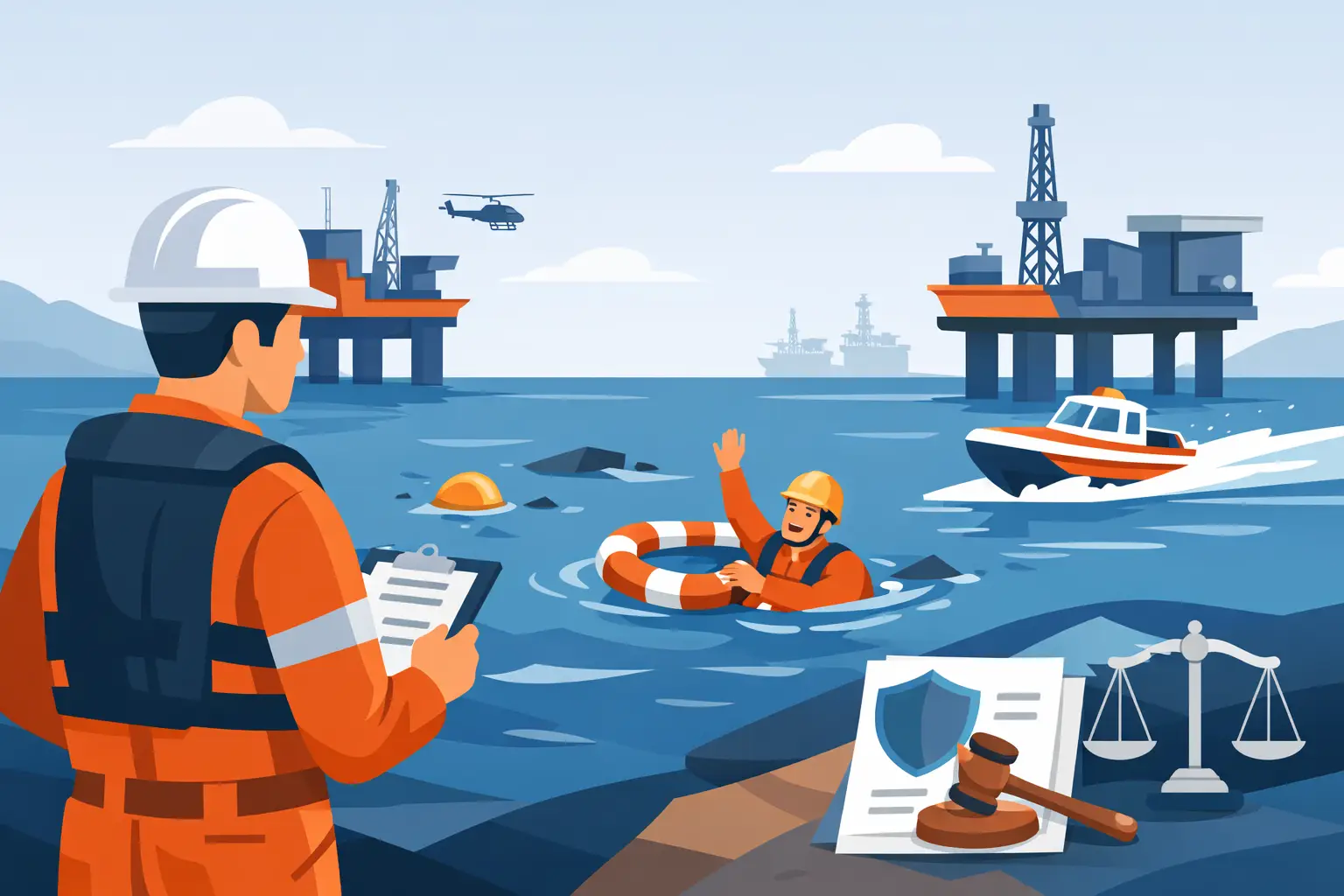


Offshore Accident Claim Guide for Gulf Workers
A crew change helicopter, a slick deck, a failed winch, a vessel collision – offshore injuries can happen in seconds. The consequences, however, can follow a Gulf worker and family for years. This offshore accident claim guide explains the practical steps that can protect your health, preserve key evidence, and help you understand whether a maritime claim may be available.
Offshore employers and their insurance carriers often start investigating immediately. Their goal may be to limit the company’s exposure. Your first priority is different: get appropriate medical care and protect your ability to support yourself and your family while you recover.
Start Protecting Your Claim at the Scene
Report the accident as soon as you safely can. Give a truthful, clear description of what happened, where it happened, who was present, and what equipment or condition contributed to the injury. Do not guess about details you do not know, and do not minimize pain simply because you want to finish the hitch or avoid letting down your crew.
Ask for a copy of any incident report before you leave the vessel, platform, dock, or facility, if possible. If you are asked to write a statement, stick to the facts. A report should not turn into an admission that the accident was your fault, particularly before the full cause is known.
Photographs and records can matter greatly in an offshore case. If your condition allows, take pictures of the area, equipment, safety gear, visible injuries, and anything that appears unsafe. Save texts, emails, work schedules, pay records, travel details, medical paperwork, and the names and contact information of witnesses. A damaged piece of equipment can be repaired or removed quickly. Video footage can be overwritten. Memories fade.
Get Medical Care and Follow Through
Some injuries announce themselves immediately. Others, including back injuries, concussions, shoulder tears, and internal injuries, may worsen after you return to shore. Do not assume that a pain medication, a few days off, or a supervisor’s reassurance means you are fine.
Tell medical providers that the injury occurred offshore or during maritime work. Explain every symptom, even if it seems minor. Follow treatment recommendations, attend appointments, and keep copies of bills, restrictions, prescriptions, and work-status notes. Gaps in treatment can be used by an insurer to argue that an injury was not serious or was caused somewhere else.
You should also be careful with company-directed medical evaluations. The issue is not whether you should refuse care. You need care. But you may have the right to seek an independent medical opinion, and you should understand the purpose of any evaluation before signing broad medical authorizations or agreeing that a company-selected doctor has the final word on your condition.
Which Law Covers an Offshore Injury?
There is no single answer for every Gulf accident. The law can depend on your job duties, your connection to a vessel, where the accident happened, and the status of the employer or contractor involved. That is why an early case evaluation is more than a formality.
Jones Act Claims for Seamen
Many offshore workers qualify as seamen under the Jones Act. In general terms, a seaman has a substantial connection to a vessel or fleet of vessels in navigation and contributes to the vessel’s mission. Deckhands, crew members, captains, engineers, cooks, and other vessel-based workers may fall into this category, but job titles alone do not decide the issue.
Under the Jones Act, an injured seaman may seek damages when employer negligence played even a small part in causing the injury. Negligence can involve inadequate training, unsafe work methods, short staffing, defective equipment, failure to provide proper safety gear, or pressure to perform a dangerous task.
A seaman may also have an unseaworthiness claim against a vessel owner. This focuses on whether the vessel, its equipment, or its crew was reasonably fit for its intended use. A slippery deck, broken ladder, poorly maintained crane, or an incompetent crew member can raise serious questions about vessel safety.
Maintenance and Cure
Maintenance and cure is a separate and often immediate concern for injured seamen. Maintenance generally refers to basic living expenses while recovering, while cure concerns reasonable medical treatment until maximum medical improvement. These benefits may be owed even when no one was at fault, provided the injury or illness arose while the seaman was in the service of the vessel.
Disputes often arise over the amount of maintenance, the medical care approved, or whether the employer says treatment is no longer necessary. Do not assume a payment offered by the company is all the law allows.
Other Maritime and Offshore Claims
Not every worker on the water is a Jones Act seaman. Longshore workers, dockworkers, ship repair workers, and some offshore employees may be covered by the Longshore and Harbor Workers’ Compensation Act or related laws. Certain fixed-platform claims may involve workers’ compensation principles, federal offshore law, or a negligence claim against a responsible third party.
The distinction matters because the available benefits, deadlines, and types of damages can differ. A worker may also have claims against companies other than the direct employer, such as an equipment manufacturer, vessel operator, contractor, or property owner. The facts deserve a close review from every angle.
Be Careful With Insurers and Early Paperwork
After a serious offshore accident, calls from adjusters can sound helpful. They may offer to arrange treatment, ask for a recorded statement, or present paperwork described as routine. Cooperation with necessary reporting is one thing. Giving a recorded statement or signing a release before you understand your injuries and rights is another.
A quick settlement can be tempting when rent, groceries, and missed paychecks are piling up. Yet serious injuries can require surgery, physical therapy, future treatment, job retraining, or permanent work restrictions. Once a release is signed, it may be difficult or impossible to seek additional compensation if your condition proves worse than expected.
Before accepting a settlement or signing documents that affect your benefits, get legal advice tailored to your situation. A maritime attorney can review what is being offered, identify missing categories of loss, and communicate with the insurer so you can focus on medical recovery.
Understand What an Offshore Claim May Cover
The value of a claim depends on the law that applies, the evidence, the severity of the injury, and the available insurance or assets. In an appropriate case, recovery may address medical expenses, lost income, reduced earning capacity, pain and suffering, physical impairment, and other losses recognized under maritime law.
For a family facing a fatal offshore accident, the legal and financial questions can be even more difficult. Wrongful death claims may involve lost financial support, funeral expenses, and other damages, but the rules differ depending on the worker’s status and where the accident occurred. Families should not have to sort through those distinctions alone while grieving.
Timing Matters More Than Most People Realize
Maritime claims have deadlines, and the right deadline is not always obvious. Waiting can also make a case harder to prove. Witnesses may move to another vessel or another company. Maintenance records may be lost. Equipment may be changed. The company’s version of events can become the only version documented.
Prompt action does not mean rushing into a lawsuit. It means preserving evidence, clarifying your employment status, protecting benefits, and making informed decisions before an insurer or employer defines the case for you.
Get a Straight Answer About Your Next Step
An offshore injury can leave even experienced Gulf workers feeling uncertain about what comes next. You may be worried about your job, your medical care, or whether reporting a problem will affect your future work. Those concerns are real, but they should not keep you from learning your rights.
McConnell Law Offices represents injured people and families across Lafayette, Acadiana, and South Louisiana with the personal attention and courtroom readiness serious cases demand. A confidential consultation can help you understand the facts, the applicable law, and the options available to you. After an offshore accident, getting clear guidance early can give you room to heal and a stronger footing for the road ahead.